
When Political models fail
More on parallels of mainstream political and economic theory

This is continuation of my thesis on Democracy. My previous articles are here (1, 2, 3).
When discussing fallacies of mainstream political theory, I’ve made a parallel comparison of these fallacies with mainstream economic theory. For example, mainstream economic theory proposes that consumer (or economic agents in general) are rational and sovereign. That means consumers or firms take rational decisions and exercise their decisions out of free will. Such generalization is wrong. The rationality itself is a dubious concept which is open to interpretation (what’s rational to you can be irrational to me). Similarly, mainstream political theory is founded on assumption that electorate is rational and sovereign. This is also wrong. In fact, the rationality is an idealist position that is attributed to the masses, and such basic assumption is necessary to build mainstream political model of Democracy.
Mainstream political model of Democracy would fail if we start with assumption that people - the electorate - are irrational. The universal suffrage would then become pointless. Similarly, mainstream economic theory also makes certain assumptions about economic agents and their behavior. If we reject these assumptions, mainstream economic models will fail. In fact, certain assumptions and suppositions are requisite to build any model in political theory or economic theory. Homo economicus is an ideal concept of a man who is rational, informed and intelligent to take best decisions in his economic interests - Homo economicus is an optimizing agent and economic theory is underpinned on this ideal man.
Economics is a contested field and heterodox economists claim that idealist assumptions of orthodox (mainstream) economic theory are wrong and thus fail to adequately explain/analyze our economy. Heterodox thinkers claim that economic models should be based on realisticness and they have formulated ‘realistic’ assumptions to build their own economic models. This I’ve explained in my previous article.
In mainstream political theory, the model of democracy is built on idealist and unrealistic assumptions. This mainstream model is what we call classical doctrine of democracy or simply classical theory. The idealist and unrealistic assumptions of classical theory of democracy are detached from our objective reality and several intellectuals have made excellent thesis on this. Most notable is landmark work of Schumpeter in his book - Capitalism, Socialism and Democracy. Similar but less organized thesis are also made by LeBon and Graham Wallas. Schumpeter also offers a realistic approach - a heterodox view of democracy - which also explains certain fallacies, shortcomings and limitations of Democracy.
When Economic models fail
What happens when economic models fail. Back when macroeconomics was not sufficiently developed, (neo)classical economic theory dominated the field which was pretty much a generalization of microeconomic theories and laissez-faire doctrine (markets knows the best). The great depression upended economies across the Atlantic. What did economic experts propose? Balance budget, wage cuts and allowing markets to correct themselves. This only made depression worse.
Economists learned some lessons and macroeconomics field evolved with major influence of Keynes. But by end of 20th century, Keynesian economics faded out and ‘Vodoo economics’ (supply side theory) emerged. It’s tenets were - Deficit reduction generates growth, lower taxes drive production, tax cuts pay for themselves etc. The debt and deficits exploded but there wasn’t any remarkable improvement in growth. The tax cuts didn’t pay for themselves but instead created a surge in inequality. However, the economists hailed the arrival of era called great moderation where central bankers can stabilize growth with monetary policies.
Mainstream economists started worshiping independent Central bankers as demigods (recall Greenspan) who delivered us the realm of great moderation. But then came the Minsky moment which caught the technocratic & independent central bankers napping off-guard. The sophisticated DGSE models failed to project the great financial crisis. All risk models of financial industry were also laid to dust. To rescue the markets, socialistic policies were implemented where treasuries and central banks gave trillions of bailouts to private institutions in form of capital injection and credit. The markets were rescued.
And what about real economy (main street) and labor markets? Here, the same old rhetoric on deficit reduction continued. So it took 7 long years for labor market to recover to its pre-recession levels - A long painful recovery. Why the recovery was so slow and painful? Because of bipartisan consensus on austerity and demise of Keynesian thinking. Democrats since days of Clinton had become a party of Balance budget and paying down the debt (they believed in negative fiscal multipliers) and Republicans were always against more government spending (except on defense).
With Neoliberalism, the TINA (there is no alternative) doctrine was born which basically meant the new economic paradigm is best of the possible alternatives. The market economy coupled with liberal democracy is the fait accompli which has to be accepted. TINA doctrine + ‘end of history’ meant that debate about political and economic systems has been settled once and for all, and nations have to adopt these systems. The Developmental State ended, Keynesianism was over, dirigisme was finished. The national economies and global economy would be guided by the markets and politics of States governed by democracy.
What has been the legacy of mainstream macro in western economies, in US and Europe? It’s stagnation, austerity and inequality. The case of Eurozone is worse where fiscal policy is permanently paralyzed because of arbitrary fiscal rules (like Maastricht treaty & German debt brake) and completely independent central bank - ECB. Guided by these kind of economic models, Eurozone did a lot of self harm which resulted in a ‘lost decade’.
Why Eurozone is marred by flawed structural designs? Because it was born in 90s - the zenith of Neoliberal era after collapse of Soviet union. Economies of Soviet union and Comecon States were also based on flawed economic designs. These States lacked efficiency and stability because of central planning and pricing rigidities which stagnated growth and strangulated innovation. While Neoliberal economies put too much faith in markets - ‘markets knows the best’ mantra, the communist nations put too much faith in central planning and State control of Capital.
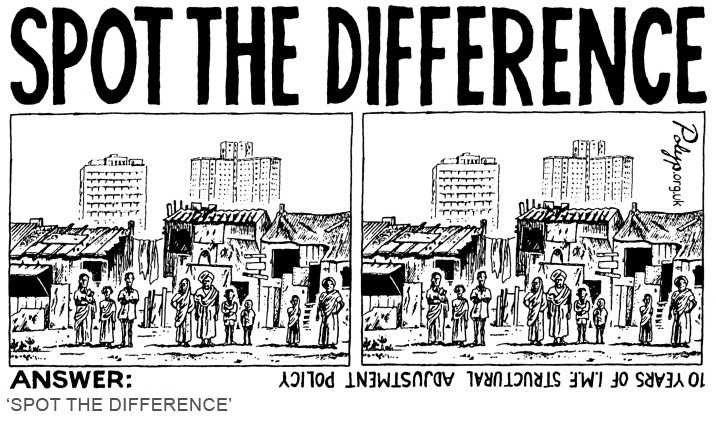
The failure of economic models was felt worldwide. The western economic model was packaged into ‘Washington consensus’ and exported to developing nations as a universal recipe for economic advancement. The success turned out to be uneven. Some nations adopted this model with success while many others faced great difficulties or failures with it.
When Political models fail
Western intellectuals have since long misinformed people about Democracy by their idealistic political models. These models start with an ideal electorate - an informed and rational population - which exercises their popular will in best interest of society. The political arena comprises of leaders with diverse ideas for governance of nation and electorate chooses those among them which they see the best of the lot.
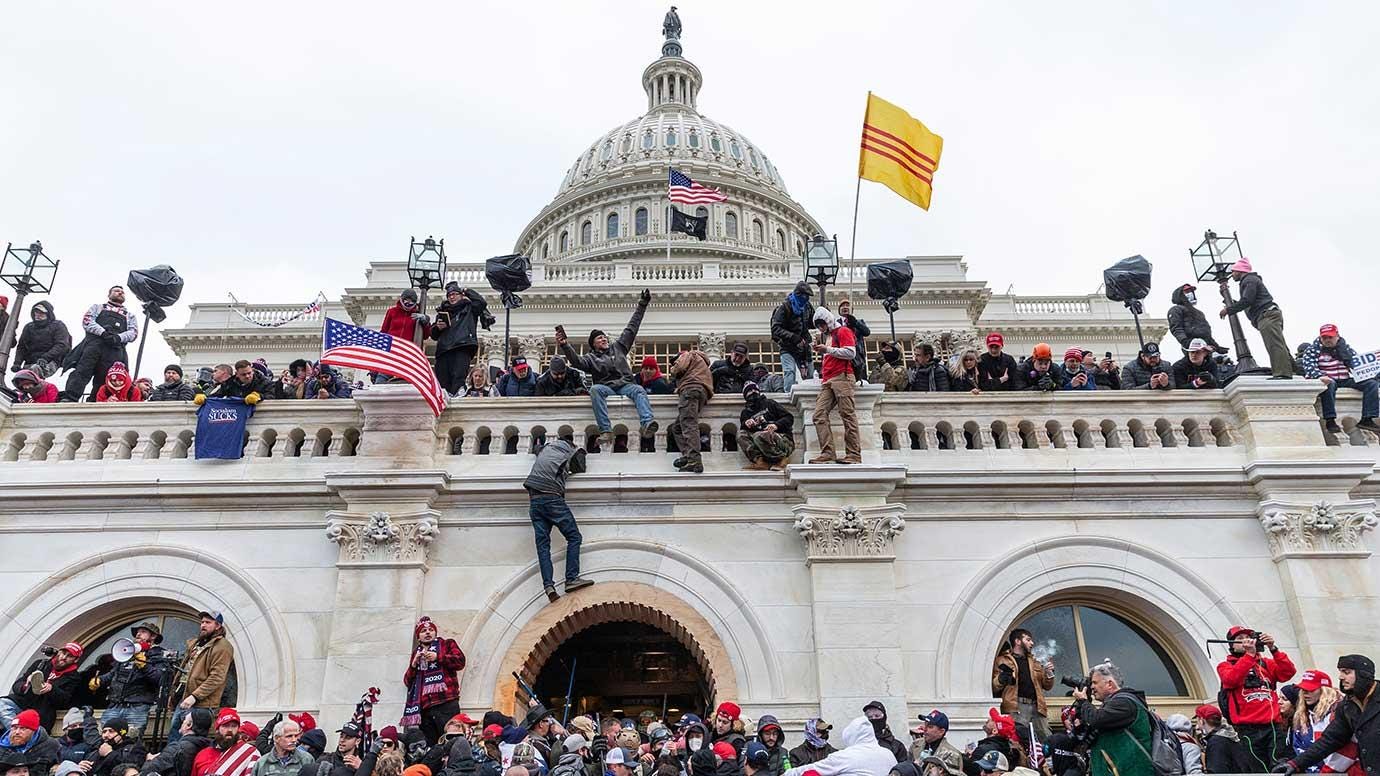
There are a lot of problems with mainstream models of democracy because it’s built on unrealistic assumptions (elaborated in my previous article). To begin with, there’s no rational and sovereign electorate. There’s no such thing as popular will of electorate as Schumpeter explained. It’s actually popular whim which is exercised in elections. Today a madman, who’s not even fit to be a janitor is put into highest public office by American voters. This is epitome of failure of rational electorate theory. Things only go downhill from here. Mainstream political theory is based on idealistic assumption that political is a playground for competing ideas for best governance of nation. In reality - as Schumpeter stated - politics is a battleground of (oligarchical) power factions who contend for power. And policy making is only an incidental outcome of democratic politics, not its main feature.

A democratic politician in populist democracy
There’s a gross misunderstanding among people who believe that ruling politicians really have some constructive plan for policy making and governance. Look at Donald Trump. Do you really think that he has a plan for governing the country? This unstable man operates on his erratic whims (dictated by his id) which change by the hour and he shoots his policy decisions at midnight through social media posts.
What about the Democrats? Today, Donald Trump is in power because Democrats in their previous tenure did not enforce the rule of law against madman Donald Trump and his coterie. Trump, indicted on nearly 100 criminal counts that includes charges of insurrection, espionage and fraud managed to escape all accountability. That is such grand failure of rule of law from which a country may not recover. Some Democrats say that they couldn’t do anything because of the Fascist Supreme Court which gave total immunity to Trump. Well, if your Courts have become Fascist and a madman takes over your highest office - Isn’t that an indictment that your political system has failed?
The problem with political system in America is not limited to crisis of populist democracy but extends also to their archaic concept of Judicial branch. Lifetime appointments of Justices has translated into dictatorships of courts. Here again we can see how an idealist model of separation of power has gone awry. The creators of this system envisioned Judges to be wise philosophers who will conserve the spirit of constitution. And to protect these wise judges from political interference, they were given lifetime appointments.
It’s common sense that ‘lifetime appointment’ itself is an invitation to corrupt and unaccountable people. With free flow of money into American politics, the oligarchs financed politicians to install their favorite judges in top courts. So substandard and corrupted politicians started packing courts with substandard and corrupted judges. While there is a crucial check on politicians - their tenure in public office is limited - the judges have no such limitations. Once an incompetent or corrupted judge enters the Judicial system, he rots the whole system for a lifetime. That’s what judges like Clarance Thomas are doing. The idealist model which was intended to make Supreme court free from political interference ended up making Supreme court as most politicized and corrupt institution in America.
Elsewhere, look at politics in UK where Labour Party recently won by a landslide. But is it really the Labour party that won? There’s really no difference between Labour party of today and conservative (Tory) party of 10-15 years ago. The Thatecherite policies of austerity and downgrading standards of living of British society continues under Labour party. What happened in UK? The political system shifted to the right. The Labour became like Tories and Tories became like UKIP (and a new monster ‘Reform party’ is born). Why did it happen? The Labour party under Corbyn wasn’t winning national elections while Tories kept winning on their bankrupt programs of austerity. So Labour thought why not emulate Tories.
This is similar to what happened in US. In 90s, a billionaire Ross Perot entered Presidential campaign and popularized the idea of Balance budget and discovered a great appeal in this slogan. Equating government budget as a household finance was a simple enough narrative which people could comprehend and it struck a chord (although this idea is complete nonsense). Although Perot lost, Bill Clinton who won the elections found the Balance budget slogan as an effective political narrative so he adopted it and worked to implement it. Such is the imbecilic political arena where playing to popular slogans rather than objective thinking drives policy ideas.
It’s not that Donald Trump is highly intelligent and wins elections through some great political acumen. Rather, the political field has reduced to such imbecility that it’s conducive to an idiot like Trump to participate and succeed in it. He keeps repeating idiotic slogans - Make America great again, Build the wall, Drain the swamp etc - and captures the sentiments of voters. The path to political success is capitalizing on sentiments of electorate. No real policy ideas and competence for governing the country is needed.
In mainstream political theory, Parliament is a sacred institution where great policy ideas are converted into good legislation. In reality, parliament is a dysfunctional body where power factions collide, compete on basis of demagogy where goal is to produce a spectacle for populist consumption. Government shutdowns have now become a routine affair in America where politicians could not come to an agreement on budget bills. As I write this article, US government is in shutdown once again since last 8 days.
The problem in America is also their archaic system of governance. For example, the ‘debt ceiling’ imposes arbitrary limit on government spending. Both parties know that this is a nonsensical self imposed idiocy but both parties never come together to repeal this obsolete law. When Democrats are in power, GOP takes the government hostage by blocking the extension of debt ceiling. When GOP is in power, Democrats get busy with politicking to paralyze the government. This game has been going on for many years.
The reality of Parliament (Congress in US) is quite simple. The politicians are not representatives of people but of donor class or oligarchs. It’s no surprise that while political parties are in bitter feud over things, they also come to bipartisan agreement over legislation where donor class interests are common. For example, the new Crypto bill which serves the parasitical Crypto lobby or the defense spending which serves defense industrial complex pass with bipartisan support .
When talking about failure of democracy, I gave an outline of affairs in the western world. Western world, which historically was conducive to democracy (and where modern democracy was born) is now facing crisis. Elsewhere, Democracy especially in many backward developing nations has already failed. For example, in my country India, the democracy has been a total disaster.
Conclusion
After collapse of Soviet Union, US became the hegemon in unipolar world order. A feature of unipolar world order included superiority of western philosophy of which there were two crucial pieces - the liberal democracy and Neoliberal economics. As a result, Political philosophers like Fukuyama and economists like Larry Summers got great reverence. People like Fukuyama were either intellectually dishonest or intellectually shallow which was evident from his thesis of ‘end of history’ and final victory of liberal democracy.
Philosophers like Schumpeter and Graham Wallas gave an unbiased and objective view of democracy in their thesis in early 20th century. Their thesis qualifies as real philosophy which stands the test of time and space although we can certainly make improvements on it and update it to new technological age.
If you look at western intellectuals today, (Timothy Snyder, Ruth Ben Ghiat, Jennifer Mercieca etc) their analysis and thesis on American politics is solely focused on Donald Trump rather than political model of America that’s on brink of failure. Donald Trump is not a problem, but a symptom of a systemic crisis - an endogenous variable of American political system. And here is the root of the problem. For how can American thinkers question their political system? Because liberal democracy is the best political model in their philosophy. So problem has to be found elsewhere.
Getting to heart of matter. Why do our idealistic models of politics and economy fail? It’s in our nature to quantify things and hence we build models. As in Scientific field, building models in economics or politics also requires certain assumptions. But modelling these complex systems involves human agents which cannot be represented by fixed idealistic assumptions. Metaphysics of human nature is very different from fixed scientific laws (like gravity, laws of motion, principles of physics). Rationality can be an arbitrary concept when applying to humans.
Another perspective is that the models - especially political models - are make believe systems. That is, these models are prescriptive - an idealist proposition on how our government, institutions and society should work. People may aspire to these idealist propositions but that doesn’t mean that things will run this way. The 18th and 19th century philosophers built ideas of democracy in their own idealistic image - how things ought to be. Not how they actually are. This is where Schumpeter’s heterodox theory of Democracy fills the void by explaining how Democracy works in reality rather than how it should work based on idealist assumptions.
Suggested readings
Capitalism, Socialism and Democracy by Schumpeter
Human Nature in Politics by Graham Wallas
Post-Keynesian Economics by Marc Lavoie
Excellent thread of posts! Keep going. Congrats
"The reality of Parliament (Congress in US) is quite simple. The politicians are not representatives of people but of donor class or oligarchs."
This absolutely true and it is due to the amount of Corruption, that is allowed to the Oligarchs and the Representatives.
All this is enabled by Corruption !
Corruption must be stopped by the Voters.
People should turn out to vote. No matter what outcome they expect.
The future is fluid and there are no guarantee of things staying the same.
How Corruption works :
1. Corruption buys Politicians.
2. Politicians create rigged Policies.
3. Rigged policies create unfair market conditions.
4. Unfair market conditions create unfair profits for the worst participants in the economy.
5. The worst participants use their money to further corrupt politicians.
The cycle then continues ad nauseum. 🐍🇺🇸🐍
It has also been proven by this research.
The conclusion was that the average vcitizen has NO INFLUENCE om Policies.
Testing Theories of American Politics: Elites, Interest Groups, and Average Citizens
Published online by Cambridge University Press: 18 September 2014
Martin Gilens and Benjamin I. Page
https://www.cambridge.org/core/journals/perspectives-on-politics/article/testing-theories-of-american-politics-elites-interest-groups-and-average-citizens/62327F513959D0A304D4893B382B992B